
Resources · Eating
“Did I do something wrong?” Fussy eating, without the guilt
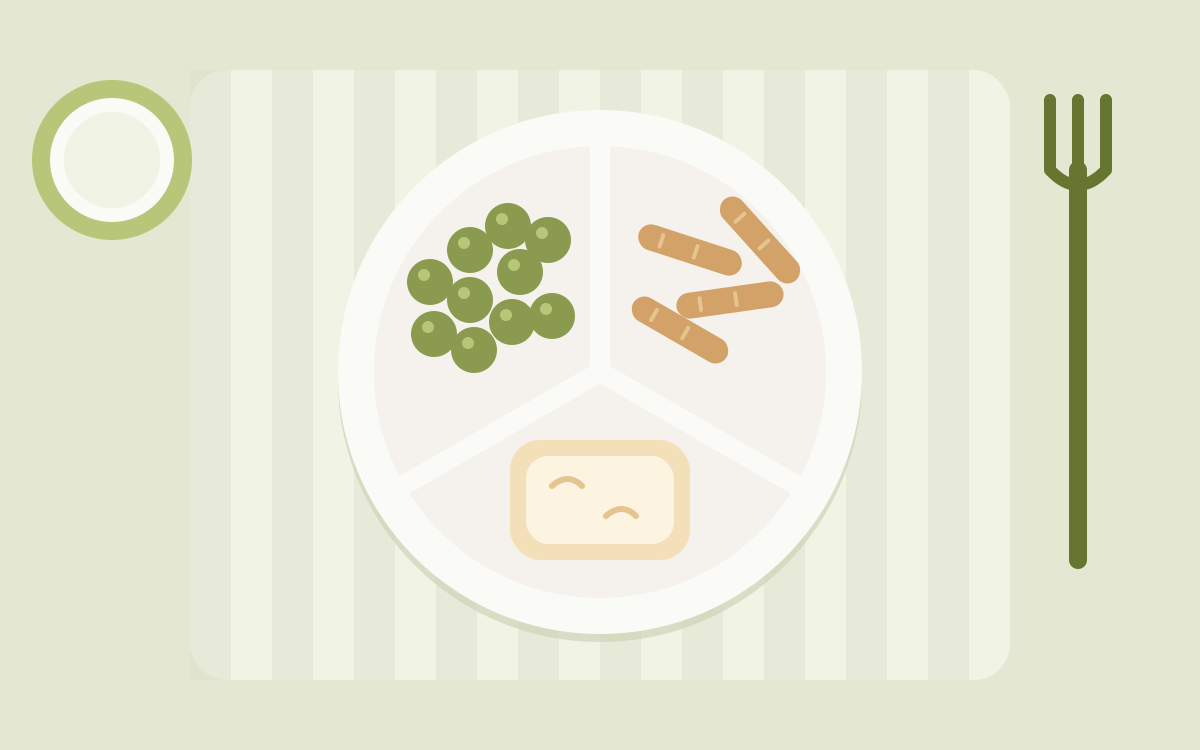
When mealtimes are hard, it’s easy to blame yourself. You cook something, it comes back untouched, and you start to wonder what you did wrong. Fussy eating is common, and it can be frustrating for even the calmest parent. Estimates of how many children are affected vary widely, because researchers define it in different ways [1].
Why eating can be hard
Eating asks a lot of a child. They’re dealing with how a food looks, smells and feels in the mouth, all at once.
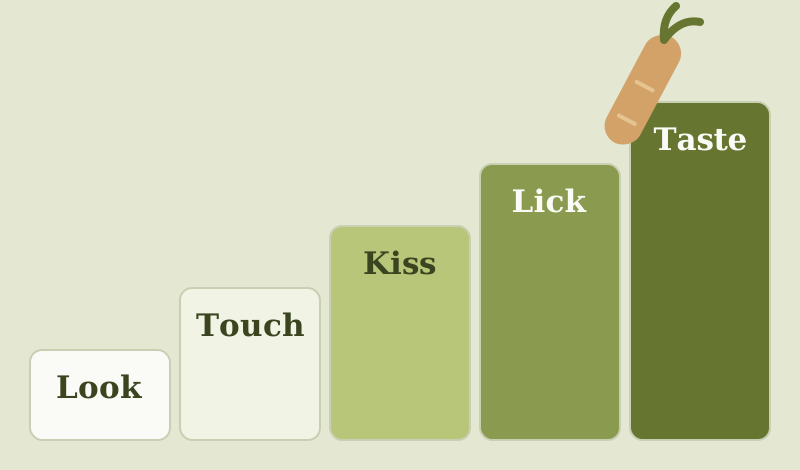
A try doesn’t have to be a bite
Many of us think a new food only counts if it’s swallowed. For a cautious child, there can be several steps before that. Studies suggest that repeated contact with a food, including looking and touching, can raise a child’s willingness to taste it [2, 4, 5].
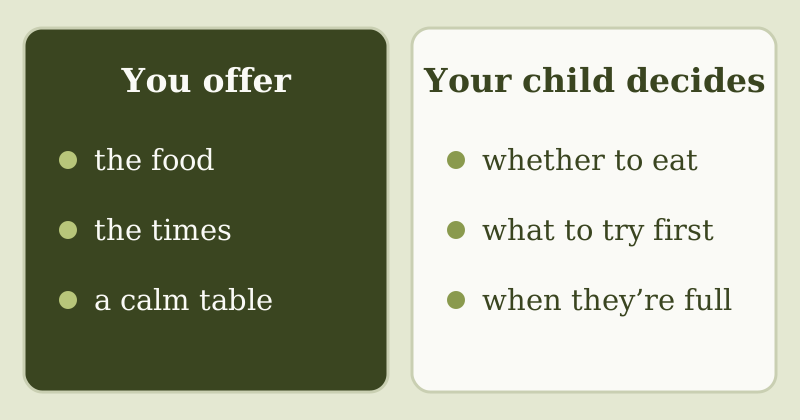
You offer, your child decides
In one study, girls whose mothers pressured them to eat at age 7 were more likely to be picky eaters at age 9 [6]. That study involved girls only and can’t show cause and effect, but it fits with the idea of splitting the job.
Ideas to try
These are practical ideas and not tested treatments. The first one draws on the research on repeated exposure [2, 4].
- Offer new or disliked foods again, a few at a time, at different meals.
- Serve new foods alongside something your child likes.
- Try a divided plate, or small bowls, if mixed foods feel like too much.
- If food is often left over, serve smaller amounts. Your child can always ask for more.
What to say at the table
| Instead of | You could try |
|---|---|
| “Just one more bite.” | “You can stop when your tummy feels full.” |
| “You don’t like broccoli.” | “You didn’t like it today. Maybe next time.” |
| “Eat your peas and you can have ice cream.” | “The peas are there if you’d like some.” |
| “Don’t play with your food.” | “What does it feel like? Is it squishy?” |
The evidence on rewards is mixed. In one large trial, stickers and praise increased how much vegetable children ate [3]. So the aim here isn’t to ban rewards, only to keep the table calm.
If you notice any of these, talk to your doctor, child health nurse or a dietitian. Sometimes there’s a physical reason that needs looking at first. Growth, a very narrow range of foods and pain when eating are among the warning signs clinicians look for [7]. If it’s the feel of food, the skills of eating or the stress around mealtimes, I’m happy to talk that through with you too.
References
- Taylor CM, Wernimont SM, Northstone K, Emmett PM (2015). Picky/fussy eating in children: review of definitions, assessment, prevalence and dietary intakes. Appetite, 95, 349–359
- Cooke L (2007). The importance of exposure for healthy eating in childhood: a review. Journal of Human Nutrition and Dietetics, 20(4), 294–301
- Cooke LJ, Chambers LC, Añez EV, Croker HA, Boniface D, Yeomans MR, Wardle J (2011). Eating for pleasure or profit: the effect of incentives on children’s enjoyment of vegetables. Psychological Science, 22(2), 190–196
- Wardle J, Herrera M-L, Cooke L, Gibson EL (2003). Modifying children’s food preferences: the effects of exposure and reward on acceptance of an unfamiliar vegetable. European Journal of Clinical Nutrition, 57(2), 341–348
- Dazeley P, Houston-Price C (2015). Exposure to foods’ non-taste sensory properties: a nursery intervention to increase children’s willingness to try fruit and vegetables. Appetite, 84, 1–6
- Galloway AT, Fiorito L, Lee Y, Birch LL (2005). Parental pressure, dietary patterns, and weight status among girls who are “picky eaters”. Journal of the American Dietetic Association, 105(4), 541–548
- Kerzner B, Milano K, MacLean WC, Berall G, Stuart S, Chatoor I (2015). A practical approach to classifying and managing feeding difficulties. Pediatrics, 135(2), 344–353
This article is general information. It is not advice about your own child. Talk to your GP or another health professional about any health concern.